Posted on Leave a comment

How to Register with the Bar Council of Delhi (BCD)

The Bar Council of Delhi (BCD) is the statutory body that registers advocates under the Advocates Act, 1961. Without this registration, you cannot practice law in Delhi courts or appear for the All India Bar Examination (AIBE).ย BCD is responsible for registering advocates, monitoring their professional conduct, and safeguarding the rights, privileges, and interests of lawyers practicing in Delhi. It also plays an active role in legal education, welfare schemes, and maintaining professional ethics among advocates.

โœ… Eligibility

  • Must have completed LLB (3-year) or BA LLB (5-year course) from a recognized university/college approved by the Bar Council of India (BCI).
  • Must be an Indian citizen (Foreign nationals need special permission from BCI).
  • Must be at least 21 years old.

๐Ÿ“‹ Documents Required

  • Keep both originals and attested photocopies ready:
  • LLB Provisional / Degree Certificate (mandatory)
  • Mark sheets of all semesters/years of LLB
  • 10th & 12th certificates (proof of date of birth + qualification)
  • Graduation Degree & Mark sheets (for 3-year LLB students)
  • Passport-size photographs (usually 6 โ€“ white background)
  • Proof of residence (Aadhaar, Voter ID, Passport, Driving License)
  • ID proof (Aadhaar, PAN Card)
  • Stamp paper affidavit (format available from BCD office โ€” declaring intent to practice law and no criminal record)
  • Certificate of enrollment in college/university (if required)
  • Internship/Training certificates (not always mandatory, but helpful)

๐Ÿ’ฐ Fees

As of recent updates (subject to revision):

  • Enrollment Fee: โ‚น13,000 (for General category)
  • Enrollment Fee: โ‚น8,000 (for SC/ST candidates)
    (This includes fees for BCD, Bar Council of India, Identity Card, and Welfare Fund)

Fees must usually be paid via Demand Draft (DD) or online payment in favor of “Bar Council of Delhi” (confirm latest mode).

๐Ÿ›  Step-by-Step Registration Process

1. Collect Application Form

  • Visit the Bar Council of Delhi office:
    ๐Ÿ‘‰ Address: Bar Council of Delhi, 2/6, Siri Fort Institutional Area, Khel Gaon Marg, New Delhi โ€“ 110049.
  • Get the Enrollment Form (sometimes available online on BCD website).

2. Fill the Form Carefully

  • Provide personal details, educational details, address, and declaration.
  • Affix passport-size photos where required.

3. Prepare Affidavit

  • Prepare the affidavit (format provided at BCD office or official website).
  • Get it attested by a Notary/Oath Commissioner.

4. Attach Documents

  • Self-attest copies of all educational certificates, ID, residence proof, etc.
  • Arrange them in the order mentioned in the checklist.

5. Pay Fees

  • Submit DD/Online Payment receipt along with the form.

6. Submit Application

  • Submit the completed file in person at the BCD office.
  • You will receive an acknowledgment receipt with your file number.

7. Verification

  • BCD will verify your documents and details.
  • They may call you if clarification is needed.

8. Enrollment Certificate

  • Once approved, you will be given an Enrollment Certificate with your Enrollment Number (D/xxxx/yyyy).
  • This certifies you as an Advocate under Bar Council of Delhi.

9. Apply for AIBE

  • After getting your enrollment number, you must register for the All India Bar Examination (AIBE).
  • Passing AIBE gives you a Certificate of Practice (COP), which allows you to practice law across India.

โณ Time Taken

  • Usually 30โ€“45 days from the date of submission, depending on verification speed.

๐Ÿ“Œ Additional Notes

  • You must renew your Certificate of Practice (COP) every 5 years as per BCI rules.
  • If you later shift your practice to another state, you can transfer your enrollment to another State Bar Council.
Posted on Leave a comment

BA LLB |Eligibility, Syllabus, Entrance Exams, Scope

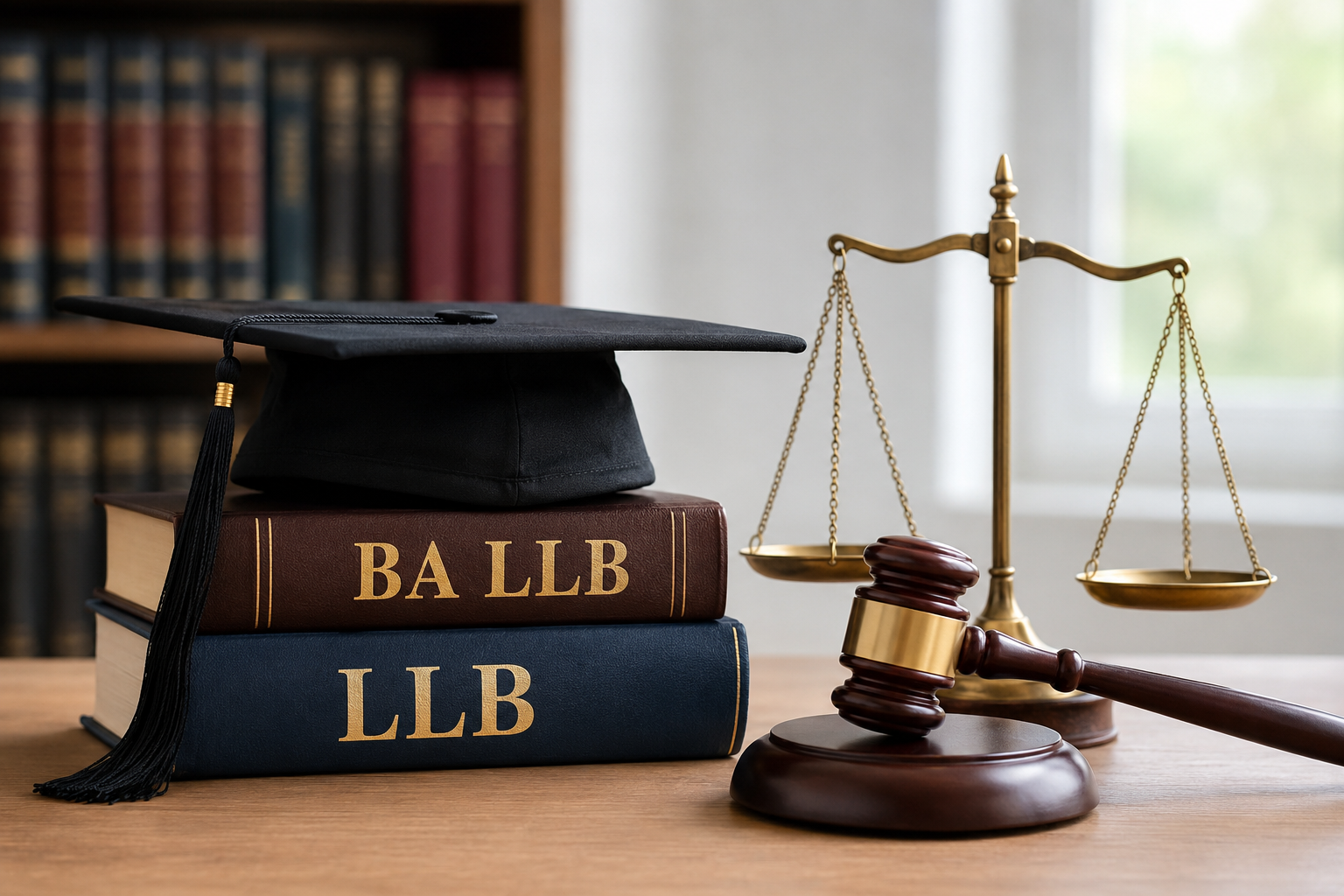
The BA LLB (Bachelor of Arts + Bachelor of Laws) is a 5-year integrated program that combines humanities subjects with professional law education. Instead of completing a BA and then pursuing an LLB separately, BA LLB saves a year and offers a strong foundation in both arts and legal studies.

It is one of the most popular choices among students after 12th who aspire to become lawyers, judges, corporate legal advisors, or legal scholars.

โœ… Eligibility

  • Qualification: 10+2 (Higher Secondary) from a recognized board
  • Minimum Marks: 45% for General / OBC, 40% for SC/ST (may vary by university)
  • Age Limit: As per the Bar Council of India (BCI), there is currently no upper age limit, though some institutes may have their own restrictions.

๐Ÿ“– BA LLB Syllabus

The BA LLB program is divided into 10 semesters over 5 years. It covers a mix of Arts and Law subjects:

Arts Subjects

  • Political Science
  • Sociology
  • Economics
  • History
  • English / Legal Language

Law Subjects

  • Constitutional Law
  • Family Law
  • Contract Law
  • Criminal Law (IPC, CrPC)
  • Civil Law (CPC, Evidence Act)
  • Environmental Law
  • Corporate Law
  • Intellectual Property Rights (IPR)
  • International Law
  • Human Rights Law
  • Legal Drafting, Moot Courts, Internship

This combination ensures that students develop a broad understanding of society along with specialized legal knowledge.

๐Ÿ“ Entrance Exams for BALLB

Admissions can be entrance-based or merit-based depending on the university. Major law entrance exams in India include:

  • CLAT (Common Law Admission Test) โ€“ for National Law Universities (NLUs)
  • AILET (All India Law Entrance Test) โ€“ for NLU Delhi
  • LSAT India
  • SLAT (Symbiosis Law Admission Test)
  • State-level law exams (MH CET Law, AP LAWCET, etc.)
  • Some private and state universities also offer direct admission based on 12th marks.

๐ŸŒ Career Scope After BA LLB

  • The BA LLB degree opens diverse career opportunities such as:
  • Litigation โ€“ Practice in courts as an advocate (after BCI registration)
  • Judiciary โ€“ Appear for judicial service exams to become a judge or magistrate
  • Corporate Law โ€“ Work as in-house counsel in MNCs, banks, and law firms
  • Law Firms & Legal Consultancy
  • Government Services & Civil Services (UPSC /State PSC)
  • NGOs & International Organizations (Human rights, environment, policy-making)
  • Academics & Research โ€“ Pursue LLM, PhD, and teaching career

๐Ÿ›๏ธ Admission Support with RKIMT

At RKIMT, we provide complete guidance and support for BA LLB aspirants:

  • Assistance with application & documentation
  • Guidance for regular, distance, and online law programs
  • Support for university selection (state/private recognized universities)
  • Re-admission & credit transfer help for discontinued students
  • Counseling for career scope in law & higher studies
  • Our mission is to make law education accessible, smooth, and student-friendly.

๐Ÿ”‘ Conclusion

BA LLB is the perfect choice for students after 12th who want to build a career in law with a solid foundation in humanities. With wide career scope in litigation, judiciary, corporate sector, and academics, it continues to be one of the most sought-after law programs in India.

If youโ€™re planning to pursue BA LLB or looking for admission/re-admission support, connect with RKIMT today and take the next step towards your legal career.

๐ŸŽ“ How Can Discontinued or Dropped Out Students Complete BA LLB?

Many students start their BA LLB (Bachelor of Arts + Bachelor of Laws) but due to personal, financial, or academic reasons, they drop out midway. Later, they want to continue and complete their law degree. Hereโ€™s how it can be done:

โœ… Options for Discontinued BA LLB Students

  • Credit Transfer System (Subject to University Policy)
  • If you already studied a few semesters, some universities allow you to transfer your credits to continue from where you left off.
  • Example: If you completed 2 years, you may get admission in 3rd year directly.
  • Lateral Entry / Re-Admission
  • Some universities provide re-admission for dropout students.
  • You can restart from the year you discontinued (2nd, 3rd, or 4th year).
  • Equivalent / Alternative Degree (Fast Track Mode)

๐ŸŒ How RKIMT Can Help?

  • Guidance on credit transfer & re-admission to continue BA LLB.
  • Help in selecting recognized universities for regular or distance law programs.
  • Alternative law-related degrees for students not interested in BCI practice.
  • Step-by-step documentation & admission support until completion.
Posted on Leave a comment

Bar Council of India – BCI | What is Bar Council of India?

The Bar Council of India (BCI), established under the Advocates Act, 1961, is the highest regulatory body for the legal profession and legal education in India. It approves law colleges, sets standards for legal studies, enrolls law graduates through State Bar Councils, conducts the All India Bar Examination (AIBE), and issues the Certificate of Practice (COP). It also governs professional ethics, disciplinary actions, and advocatesโ€™ welfare.

1๏ธโƒฃ What is BCI?

  • The Bar Council of India (BCI) is the apex statutory body regulating legal education and the legal profession in India.
  • Established under the Advocates Act, 1961.
  • Supervises all State Bar Councils.
  • Ensures standards of legal education, enrollment, professional conduct, and ethics.

2๏ธโƒฃ Key Functions of BCI

๐ŸŽ“ Legal Education

  • Approves law colleges & universities across India.
  • Prescribes curriculum, teaching methods, duration of courses.
  • Conducts inspections to maintain quality.
  • Approves 3-year LLB and 5-year Integrated LLB programs.

โš–๏ธ Regulation of Advocates

  • Frames rules of professional ethics for advocates.
  • Enroll law graduates via State Bar Councils.
  • Maintains rolls of practicing advocates.
  • Disciplinary control: takes action against misconduct.

๐Ÿ“ All India Bar Examination (AIBE)

  • Mandatory for law graduates after enrollment with State Bar Council.
  • Passing AIBE grants Certificate of Practice (COP).
  • Without COP โ†’ not eligible to practice in courts of law.

๐Ÿ’ผ Welfare & Policy

  • Runs Advocatesโ€™ Welfare Fund.
  • Provides aid for medical, accidental, or family emergencies.
  • Supports families of deceased advocates.
  • Conducts legal aid and awareness programs.

3๏ธโƒฃ Structure of BCI

  • Composed of members elected from all State Bar Councils.
  • Headed by a Chairman and Vice-Chairman.
  • Works through committees (Legal Education, Disciplinary, Welfare, Legal Aid).

4๏ธโƒฃ Process for a Law Graduate (Step by Step)

  • Complete LLB (3 years/5 years) from a BCI Approved college.
  • Apply for enrollment with your State Bar Council (submit documents & fees).
  • Attend Enrollment Ceremony โ†’ Get your Enrollment Certificate.
  • Register & appear for AIBE.
  • On clearing, receive Certificate of Practice (COP) from BCI.
  • Now you are eligible to practice law anywhere in India.

5๏ธโƒฃ BCI and Law Colleges

  • Law colleges must get BCI approval to grant valid LLB degrees.
  • Without BCI recognition โ†’ degree is not valid for enrollment.
  • BCI periodically publishes approved/de-recognized college lists.

6๏ธโƒฃ Challenges Faced by BCI

  • Mushrooming of fake/unapproved law colleges.
  • Delays in enrollment & verification.
  • Need for modernization in legal education.
  • Handling disciplinary cases effectively.
Posted on Leave a comment

Step by Step Process For BCI (Bar Council of India) Registration in Karnataka

The Bar Council of India (BCI) Registration is a mandatory process for all law graduates who wish to practice as advocates in India. In Karnataka, graduates of a 3-year LLB or 5-year integrated law course must register with the Karnataka State Bar Council (KSBC). The process includes submitting academic documents, paying prescribed fees, attending the official enrollment ceremony, and later qualifying in the All India Bar Examination (AIBE). Successful registration grants an enrollment number and, after passing AIBE, a Certificate of Practice, legally authorizing the advocate to practice law in any court across India.

๐Ÿ›๏ธ BCI Registration in Karnataka โ€“ Complete Process

1๏ธโƒฃ Eligibility

  • Must have completed LLB (3-Year) or BA LLB (5-Year Integrated Law Course) from a BCI – Approved university/college.
  • Must have provisional/degree certificate + Marksheets.

2๏ธโƒฃ Collect Required Documents

You will need:

  • LLB Provisional / Degree Certificate (attested copy)
  • LLB Final Year Marks Card (attested copy)
  • SSLC / 10th Marks Card (for DOB proof)
  • PUC / 12th Marks Card (attested copy)
  • Transfer Certificate (TC) from college
  • Passport-size Photos (usually 6 โ€“ recent, in formal attire)
  • Proof of Address & Identity (Aadhar, Passport, Voter ID)
  • Internship/Training Certificate (if required by university)

(Note: All photocopies must be attested by a gazetted officer or principal of law college.)

3๏ธโƒฃ Apply at Karnataka State Bar Council (KSBC)

  • Visit the Karnataka State Bar Council office (High Court premises, Bengaluru).
  • Collect the enrollment application form or download from KSBC official website.
  • Fill in details carefully (personal info, education details, parent/guardian details, etc.).
  • Attach required documents.

4๏ธโƒฃ Pay the Prescribed Fees

  • Enrollment fee is paid via DD (Demand Draft) in favour of โ€œBar Council of Indiaโ€ and โ€œKarnataka State Bar Councilโ€.
  • Fee breakup (approx.):
  • To BCI: โ‚น2,500
  • To State Bar Council: โ‚น6,000 โ€“ โ‚น7,000 (varies slightly)
  • SC/ST concession may apply.

Additional charges for welfare fund, ID card, etc.

5๏ธโƒฃ Submit Application

  • Submit the filled application with DDs and documents at the Enrollment Section of KSBC.
  • The office will verify and issue an acknowledgement/registration number.

6๏ธโƒฃ Attend Enrollment Ceremony

  • KSBC conducts an Enrollment Program (usually once/twice a month).
  • You must appear in formal dress code (black coat, white shirt, advocate band).
  • Your name will be announced, and youโ€™ll take an oath as an Advocate.
  • Youโ€™ll receive your Enrollment Certificate (Enrollment No. โ€“ KAR/xxxx/20xx).

7๏ธโƒฃ Apply for All India Bar Examination (AIBE)

  • After State Bar Council registration, you must apply for the AIBE (Bar Exam) conducted by BCI.
  • Once you pass, youโ€™ll receive a Certificate of Practice (COP) from BCI, which allows you to practice law in India.

โœ… Summary

Steps:
LLB Degree โ†’ Collect Documents โ†’ Apply at Karnataka State Bar Council โ†’ Pay Fees โ†’ Attend Enrollment โ†’ Get Enrollment Certificate โ†’ Write AIBE โ†’ Get COP โ†’ Start Practicing as Advocate.

Posted on Leave a comment

Diploma in Health Sanitary Inspector | Eligibility | Duration | Syllabus | Scope & Career Opportunities

The Diploma in Health Sanitary Inspector is a skill-based paramedical program that trains students in public health, sanitation, hygiene, disease control, and preventive healthcare. It prepares professionals to work with municipal bodies, health departments, and sanitation departments ensuring a clean and safe environment.

โœ… Eligibility:

๐Ÿ”น Educational Qualification: 10th or 12th pass (Science preferred)

๐Ÿ”น Age Limit: Minimum 17 years (varies by institute)

๐Ÿ”น Medical Fitness: Required

โณ Duration:

๐Ÿ”น 1 to 2 Years (Depending on institution and curriculum)ย Includes classroom teaching + field training/internship

๐Ÿ“š Syllabus Highlights:

๐Ÿ”น Environmental Sanitation

๐Ÿ”น Public Health & Hygiene

๐Ÿ”น Communicable & Non-communicable Diseases

๐Ÿ”น Waste Management

๐Ÿ”น Food Safety & Hygiene

๐Ÿ”น Water Purification Techniques

๐Ÿ”นFirst Aid and Disaster Management

๐Ÿ”นField Surveys & Report Preparation

๐ŸŒ Scope & Career Opportunities:

๐Ÿ”นGovernment & Municipal Jobs (Health Dept., Sanitation Dept.)

๐Ÿ”นHospitals and Clinics

๐Ÿ”นNGOs working in Public Health

๐Ÿ”นUrban and Rural Health Missions

๐Ÿ”นFood Safety and Inspection Agencies

๐Ÿ”นSelf-employment as Health Consultant/Inspector

๐Ÿ‘ฅ Who Can Join This Program?

๐Ÿ”น10th or 12th pass students

๐Ÿ”นIndividuals interested in a public health career

๐Ÿ”นThose looking for quick employment in the health and sanitation sector

๐Ÿ”นNGO workers or community health volunteers

๐Ÿ“ž Contact RKIMT For Admission:
๐Ÿ“ฑ Call/WhatsApp: + 91 – 9599329455

Posted on Leave a comment

Top 10 MBBS Universities and Colleges in Russia

With its world-renowned universities, affordable tuition fees, English-medium MBBS programs, and global recognition, Russia continues to be a top choice for medical aspirants worldwide โ€” especially Indian students. From the historic halls of Moscow to the beautiful campuses in Kazan and Siberia, Russia offers excellent education, clinical exposure, and a multicultural experience.ย  Hereโ€™s a look at the Top 10 MBBS Universities and Colleges in Russia where your medical journey can begin!

1. Lomonosov Moscow State University

๐Ÿ“ Location: Moscow
๐Ÿ“… Established: 1755
๐ŸŽ“ Courses Offered: MBBS, MD, Medical Research Programs
๐ŸŒŸ Highlights: Top-ranked in Russia; strong in clinical and research programs.

2. Pirogov Russian National Research Medical University (RNRMU)

๐Ÿ“ Location: Moscow
๐Ÿ“… Established: 1906
๐ŸŽ“ Courses Offered: MBBS (English Medium), Dentistry, Pharmacy
๐ŸŒŸ Highlights: Government medical university; highly reputed worldwide.

3. Sechenov First Moscow State Medical University

๐Ÿ“ Location: Moscow
๐Ÿ“… Established: 1758
๐ŸŽ“ Courses Offered: MBBS, Surgery, Pharmacy
๐ŸŒŸ Highlights: Oldest medical university in Russia; excellent clinical training.

4. Kazan Federal University

๐Ÿ“ Location: Kazan, Republic of Tatarstan
๐Ÿ“… Established: 1804
๐ŸŽ“ Courses Offered: MBBS, Pediatrics, Dentistry
๐ŸŒŸ Highlights: MCI/NMC approved; over 200 years of academic excellence.

5. Peopleโ€™s Friendship University of Russia (RUDN University)

๐Ÿ“ Location: Moscow
๐Ÿ“… Established: 1960
๐ŸŽ“ Courses Offered: MBBS (English Medium), Dentistry, Pharmacy
๐ŸŒŸ Highlights: Very international student base; WHO & NMC recognized.

6. Crimean Federal University (V.I. Vernadsky CFU)

๐Ÿ“ Location: Simferopol, Crimea
๐Ÿ“… Established: 1918
๐ŸŽ“ Courses Offered: MBBS, General Medicine
๐ŸŒŸ Highlights: Affordable tuition; English medium courses; modern facilities.

7. Bashkir State Medical University

๐Ÿ“ Location: Ufa, Bashkortostan
๐Ÿ“… Established: 1932
๐ŸŽ“ Courses Offered: MBBS, Dentistry, Pharmacy
๐ŸŒŸ Highlights: Government university; large number of Indian students.

8. Orenburg State Medical University

๐Ÿ“ Location: Orenburg
๐Ÿ“… Established: 1944
๐ŸŽ“ Courses Offered: MBBS, Nursing, Pharmacy
๐ŸŒŸ Highlights: Affordable education; MCI/NMC approved.

9. Volgograd State Medical University

๐Ÿ“ Location: Volgograd
๐Ÿ“… Established: 1935
๐ŸŽ“ Courses Offered: MBBS, Dentistry, Pediatrics
๐ŸŒŸ Highlights: WHO-listed; strong practical training.

10. Siberian State Medical University

๐Ÿ“ Location: Tomsk, Siberia
๐Ÿ“… Established: 1888
๐ŸŽ“ Courses Offered: MBBS, Pharmacy, Clinical Psychology
๐ŸŒŸ Highlights: One of the oldest and highly-ranked universities.

11. Kuban State Medical University

๐Ÿ“ Location: Krasnodar
๐Ÿ“… Established: 1920
๐ŸŽ“ Courses Offered: MBBS, Dentistry, Pharmacy
๐ŸŒŸ Highlights: Warm climate; recognized by WHO, NMC.

12. Belgorod State National Research University

๐Ÿ“ Location: Belgorod
๐Ÿ“… Established: 1876
๐ŸŽ“ Courses Offered: MBBS, Dentistry
๐ŸŒŸ Highlights: Advanced laboratories; strong international collaborations.

13. Altai State Medical University

๐Ÿ“ Location: Barnaul, Altai Krai
๐Ÿ“… Established: 1954
๐ŸŽ“ Courses Offered: MBBS, Dentistry, Pediatrics
๐ŸŒŸ Highlights: Affordable fees; good FMGE (MCI Screening Test) passing ratio.

14. Kazan State Medical University

๐Ÿ“ Location: Kazan, Republic of Tatarstan
๐Ÿ“… Established: 1814
๐ŸŽ“ Courses Offered: MBBS, General Medicine, Dentistry
๐ŸŒŸ Highlights: Ranked among the top medical universities; English-medium available.

15. Ulyanovsk State University

๐Ÿ“ Location: Ulyanovsk
๐Ÿ“… Established: 1988
๐ŸŽ“ Courses Offered: MBBS, Pediatrics, Nursing
๐ŸŒŸ Highlights: Affordable education; NMC-approved; focus on practical knowledge.

Why Choose RKIMT for MBBS Admission?

โœ… Personalized University Selection
โœ… 100% Transparent Process
โœ… Direct Admission Without Donation
โœ… Visa Assistance
โœ… Pre-departure and Post-arrival Support
โœ… Hostel and Accommodation Support
โœ… Free Counseling Sessions for Students and Parents
โœ… Assistance in MCI/NMC Registration after Degree Completion

๐ŸŽฏ Make Your MBBS Dream in Russia Come True with RKIMT!

๐Ÿ“ž Helpline: + 91 – 9599329455
๐ŸŒ Website: https://www.rkimt.com
๐Ÿ“ฉ Email: info@rkimt.com

Posted on Leave a comment

DAMA (Designated Area Migration Agreement) Australia Visa Work Permit program

The Designated Area Migration Agreement (DAMA) is a specialized immigration program in Australia that allows regional employers to sponsor skilled and semi-skilled overseas workers for positions they are unable to fill locally. This program is particularly beneficial for individuals, seeking employment opportunities in regional Australia.

What is DAMA?
DAMA (Designated Area Migration Agreement) is a formal agreement between the Australian Government and regional authorities to allow employers in specific areas of Australia to sponsor skilled and semi-skilled overseas workers for positions they can’t fill locally.

It is a work permit pathway under the Temporary Skill Shortage (TSS) visa (subclass 482) and Employer Nomination Scheme (subclass 186).

โœ… Key Benefits of DAMA

โœ”๏ธ Wider Occupation List

  • Includes jobs not available under standard skilled migration listsโ€”includes lower-skilled and semi-skilled roles.

โœ”๏ธVisa Concessions

  • Lower English language requirements
  • Broader age limits
  • Lower salary thresholds
  • Pathways to PR (Permanent Residency)

โœ”๏ธ Employer-Sponsored

  • You donโ€™t need to apply independentlyโ€”your employer sponsors your visa under a DAMA agreement.

โœ”๏ธ Pathway to PR

  • Many DAMA roles offer transition pathways to permanent residency through subclass 186.

๐Ÿงญ DAMA Visa Process โ€“ Step-by-Step

Step 1: Job Offer

  • Find a job in a DAMA region.
  • Your employer must be unable to fill the position locally.

Step 2: Regional Authority Endorsement

  • The employer gets endorsed by the relevant DAMA authority in that region.

Step 3: Labor Agreement Application

  • The employer applies for a Labour Agreement with the Department of Home Affairs, citing the DAMA agreement.

Step 4: Nomination & Visa Application

  • Once approved, the employer nominates you for a visa (e.g., subclass 482).
  • You then apply for the visa.

๐Ÿ—บ๏ธ DAMA Regions (2025)

There are currently 12 DAMA regions in Australia:

  • Northern Territoryโ€‹
  • Far North Queenslandโ€‹
  • Orana, New South Walesโ€‹
  • Goulburn Valley, Victoriaโ€‹
  • Great South Coast, Victoriaโ€‹
  • Adelaide City Technology and Innovation Advancement, South Australiaโ€‹
  • South Australia Regionalโ€‹
  • Pilbara, Western Australiaโ€‹
  • South West, Western Australiaโ€‹
  • The Goldfields, Western Australiaโ€‹
  • East Kimberley, Western Australiaโ€‹
  • Townsville, Queenslandโ€‹
  • Western Australiaโ€‹

๐Ÿ“„ Eligibility Criteria (General)

To qualify under DAMA, you typically need:

  • A valid job offer in a DAMA region.
  • Relevant skills and/or work experience for the occupation.
  • Health and character checks.
  • Meet language and salary requirements (concessions may apply).

๐Ÿ”„ Recent Update (2025)

  • Northern Territory DAMA extended until 2030
  • Annual quota increased from 625 to 1,500
  • Occupation list expanded to 325 job roles

๐Ÿ› ๏ธ Visa Types under DAMA

Subclass 482 ย Temporary Skill Shortage Visa ย Initial entry โ€“ 2-4 years validity
Subclass 186 ย Employer Nomination Scheme ย Permanent Residency pathway
Subclass 494 Skilled Employer Sponsored Regional Visa Temporary to PR route (3-5 years)

๐ŸŒ How to Apply?

  • Check if your occupation is listed in a DAMA region.
  • Find an employer in that region.
  • Ensure they are eligible to sponsor you under the DAMA.
  • Go through the endorsement and visa application process.

If you’re looking for help connecting with a DAMA sponsor, resume assistance, or education-to-work migration pathways,ย  Contact RKIMT today!

Posted on Leave a comment

Why is the Personal Support Worker (PSW) Job in Demand?

Personal Support Worker (PSW) are in high demand for several reasons, especially in countries like Canada, the UK, and parts of the U.S. Hereโ€™s a breakdown of why this role is so sought-after:

โœ” ย Aging Population
Many countries, especially developed ones like Canada, Germany, Japan, and the UK, have a rapidly aging population. Seniors need day-to-day supportโ€”PSWs provide that essential care.

โœ” ย Shortage of Healthcare Staff
Hospitals, nursing homes, and home care services face staff shortages. PSWs help bridge that gap by handling non-medical tasks and easing the burden on nurses.

โœ” ย Increased Demand for Home Care
More families prefer in-home care for elderly or disabled loved ones. PSWs are the primary support in such settings.

โœ” ย Rise in Chronic Illnesses & Disabilities
Patients with long-term illnesses or post-surgery needs require help with mobility, hygiene, and mealsโ€”PSWs are trained for this exact role.

โœ” ย High Turnover Creates Constant Vacancies
Many leave the field due to physical demands or low wages. This keeps job demand consistently high.

โœ… Eligibility Criteria to Become a PSW

  • Minimum Qualification: High school (10+2 or equivalent)
  • Preferred: Diploma or Certificate in Personal Support Work, Caregiving, or Nursing Aide from a recognized institute
  • Language: Basic English communication (IELTS may be required for overseas jobs)
  • Experience: Some roles accept freshers; others prefer 6 months to 2 years of experience
  • Physical Fitness: Should be able to assist in lifting/moving patients

๐ŸŒ Most Demanding Countries for PSWs

  • Canada
  • United Kingdom (UK)
  • Germany
  • Australia
  • New Zealand
  • Ireland
  • Middle East (UAE, Saudi Arabia, Qatar)

๐Ÿ“ž Contact RKIMT for PSW Job Assistance
RKIMT provides complete support for PSW job opportunities in India and abroad, including:

  • Job placement
  • Visa and documentation assistance
  • Training and certification

๐Ÿ‘‰ Contact Details:

๐Ÿ“ž Phone/WhatsApp: +91-9599329455

๐ŸŒ Website: www.rkimt.com

Posted on Leave a comment

Bachelor of Social Work (BSW) | Duration | Eligibility | Syllabus | Fee | Career Scope

The Bachelor of Social Work (BSW) is a professional undergraduate degree program designed for students interested in social service and community development. It equips students with the knowledge and skills needed to work in social welfare organizations, NGOs, healthcare, and other social sectors.

๐Ÿ“Œ 1. About the BSW Course
BSW is a 3-year undergraduate degree that focuses on social work, community service, human rights, social justice, and welfare programs. The course trains students to work with underprivileged communities, address social issues, and contribute to social change.

๐Ÿ“Œ 2. Course Duration
โณ Total Duration: 3 Years
๐Ÿ“š Divided into 6 Semesters

๐Ÿ“Œ 3. Eligibility Criteria
โœ” Educational Qualification: Candidates must have passed 12th grade (Intermediate) from a recognized board.
โœ” Stream Requirement: Students from any stream (Arts/Science/Commerce) can apply.
โœ” Minimum Marks: Some universities require 50% – 55% marks (relaxation for reserved categories).
โœ” Admission Process:

๐Ÿ“Œ 4. BSW Syllabus
The BSW syllabus covers subjects related to social work, psychology, human rights, sociology, and community development.

๐Ÿ‘‰ First Year Subjects:
โœ… Introduction to Social Work
โœ… Human Growth and Development
โœ… Social Research Methods
โœ… Indian Society and Culture
โœ… Social Justice and Human Rights

๐Ÿ‘‰ Second Year Subjects:
โœ… Social Problems and Solutions
โœ… Child Welfare and Women Empowerment
โœ… Rural and Urban Community Development
โœ… Social Policy and Planning
โœ… Social Work Field Training

๐Ÿ‘‰ Third Year Subjects:
โœ… Medical and Psychiatric Social Work
โœ… Industrial Social Work
โœ… Criminology and Justice System
โœ… NGO Management
โœ… Case Study and Field Work

๐Ÿ“Œ 5. Fee Structure
The fee for a BSW program varies based on whether you enroll in a government or private college.

๐Ÿซ Government Colleges: โ‚น5,000 โ€“ โ‚น30,000 per year
๐Ÿ› Private Colleges: โ‚น40,000 โ€“ โ‚น1,00,000 per year

โœ” Scholarships Available for SC/ST/OBC/EWS category students.

๐Ÿ“Œ 6. Career Scope After BSW
BSW graduates have diverse job opportunities in government, private, and non-profit organizations.

๐Ÿ‘‰ Job Sectors for BSW Graduates:
โœ… NGOs (Non-Governmental Organizations)
โœ… Child Welfare & Women Empowerment Organizations
โœ… Human Rights Agencies
โœ… Healthcare & Mental Health Services
โœ… Community Development Projects
โœ… Corporate Social Responsibility (CSR) Initiatives
โœ… Disaster Management and Relief Work

๐Ÿ‘‰ Popular Job Roles After BSW:
๐Ÿ”น Social Worker
๐Ÿ”น Counselor
๐Ÿ”น NGO Project Manager
๐Ÿ”น Health Worker
๐Ÿ”น Human Rights Activist
๐Ÿ”น Welfare Officer
๐Ÿ”น Psychological Support Officer

๐Ÿ‘‰ Salary Expectations:
๐Ÿ’ฐ Starting Salary: โ‚น2.5 LPA โ€“ โ‚น5 LPA
๐Ÿ’ฐ With Experience: โ‚น8 LPA โ€“ โ‚น12 LPA

๐Ÿ“Œ 7. Importance of BSW in Todayโ€™s World

๐ŸŒ Why is BSW Important in Modern Society?

โœ” Promotes Human Rights & Justice โ€“ Helps in advocating for equal rights and social justice.
โœ” Mental Health Awareness โ€“ Supports people dealing with psychological and emotional challenges.
โœ” Poverty & Unemployment Reduction โ€“ Works towards uplifting marginalized communities.
โœ” Women & Child Welfare โ€“ Focuses on education, safety, and empowerment.
โœ” Disaster Management โ€“ Assists in rehabilitation and relief work during crises.
โœ” Community Development โ€“ Engages in rural and urban development projects.

๐Ÿ“Œ 8. Higher Studies After BSW
BSW graduates can pursue higher education for better career opportunities:

๐ŸŽ“ MSW (Master of Social Work)
๐ŸŽ“ MBA in Social Work & NGO Management
๐ŸŽ“ MA in Sociology / Psychology
๐ŸŽ“ LLB (Bachelor of Laws)
๐ŸŽ“ PG Diploma in Social Work & Welfare Management

๐Ÿ“Œ Conclusion
BSW is an excellent career choice for students passionate about social service and welfare work. It offers employment opportunities, career growth, and higher education prospects in various sectors.

๐Ÿ’ก If you want to make a positive impact on society, BSW is the right course for you!

๐Ÿ“ž For BSW Admissions, Contact: RKIMT
๐Ÿ“ง Email: info@rkimt.com
๐Ÿ“ž Phone: +91 – 9599329455

Posted on Leave a comment

How to Check if Your Degree Certificate is Original or Fake in India?

If you have obtained a degree certificate and want to verify whether it is original or fake, follow these detailed steps to ensure its authenticity.

๐Ÿ“Œ 1. Verify with the Issuing University
The first step is to confirm the degree’s authenticity directly with the university that issued it.

โœ… Online Verification Through University Website
Most universities in India provide an online verification system where you can enter your enrollment number/roll number/registration number to verify your degree.

  • Visit the official website of your university.
  • Look for the degree verification section (sometimes under “Examination” or “Student Services”).
  • Enter your enrollment number and verify your details.

๐Ÿ“Œ Example:
If you completed your degree from Delhi University, visit www.du.ac.in and check their verification portal.

โœ… Contact the University Registrar’s Office
If online verification is unavailable, you can visit or contact the university registrar’s office.

  • Provide a copy of your degree certificate.
  • Ask them to verify the enrollment number and student details.
  • The university may issue a verification letter confirming the authenticity of your degree.

โœ… Check University Name & Logo
Ensure that the university name, logo, and seal on the degree match official university records. Fake certificates often contain spelling errors, incorrect logos, or missing details.

๐Ÿ“Œ 2. Check University Recognition with UGC & AICTE
A degree is valid only if issued by a UGC – recognized university or an AICTE- Approved institution (for technical programs).

โœ… Check UGC (University Grants Commission) Approval

  • Visit UGCโ€™s official website: www.ugc.ac.in
  • Click on โ€œRecognized Universitiesโ€ to check if your university is approved and recognized.
  • If your university is not listed, it might be fake or unrecognized.

๐Ÿ“Œ Also, check the UGC Fake University List: Fake Universities in India

โœ… Check AICTE (For Technical Courses like B.Tech, M.Tech, MBA)

  • Visit AICTEโ€™s website: www.aicte-india.org
  • Click on โ€œApproved Institutionsโ€ and enter your university/college name.

๐Ÿ“Œ 3. Verify Degree Certificate Through Government Portals
The Indian government has introduced digital verification platforms for degrees.

โœ… National Academic Depository (NAD)

  • NAD stores digital copies of degrees issued by universities.
  • Visit nad.gov.in and log in.
  • Check if your degree certificate is available.

โœ… DigiLocker (For Government Universities & Boards)

  • Many Indian universities issue digital degree certificates via DigiLocker.
  • Visit digilocker.gov.in and log in with your Aadhaar-linked account.
  • Search for your degree certificate.

๐Ÿ“Œ 4. Look for Security Features on the Degree Certificate
Genuine university degree certificates have built-in security features to prevent forgery. Check for:

โœ… Hologram/Watermark โ€“ Most universities include a hologram or watermark as a security feature.
โœ… Embossed Seal โ€“ A genuine degree will have a raised embossed university seal.
โœ… Signature of Authorities โ€“ Verify the Vice-Chancellor, Registrar, or Controller of Examination’s signature.
โœ… Paper Quality & Font โ€“ Fake degrees may have poor print quality, incorrect fonts, or errors.

๐Ÿ“Œ 5. Cross-Check Registration & Roll Number

  • Each degree has a unique registration/enrollment number.
  • Compare this number with your university records or mark sheets.
  • A fake degree may not have a verifiable registration number.

๐Ÿ“Œ 6. Employer & Third-Party Verification Services
Many employers and agencies offer degree verification services for job applications and higher studies.

โœ… NSDL e-Governance Verification

  • Visit www.nad.ndml.in.
  • Employers or students can apply for degree verification.

โœ… HRD Ministry & Embassy Attestation (For Foreign Use)
If you plan to use your degree abroad, get it attested by the HRD Ministry and the respective embassy.

๐Ÿ“Œ 7. Report Fake Degrees to Authorities
If you suspect that a degree is fake, report it to:
๐Ÿ“Œ UGC (University Grants Commission) โ€“ www.ugc.ac.in
๐Ÿ“Œ AICTE (For Technical Degrees) โ€“ www.aicte-india.org
๐Ÿ“Œ Local Police or Cyber Crime Department

โš ๏ธ Warning Signs of a Fake Degree Certificate
๐Ÿšจ Fake universities issuing degrees without exams or attendance
๐Ÿšจ Misspellings, incorrect fonts, poor print quality
๐Ÿšจ No official website or online verification option
๐Ÿšจ Unrecognized by UGC, AICTE, or MHRD
๐Ÿšจ Degree obtained within a few days/weeks without proper process

๐Ÿ“ž Need Help Verifying Your Degree?
For Degree Verification, University Recognition, and Genuine One-Year Degree Programs, Contact RKIMT Today! ๐Ÿš€