Posted on Leave a comment

B.Sc. MLT – Course Details, Eligibility, Syllabus, Career Scope & Admission Support

The healthcare industry is expanding rapidly, creating strong demand for skilled diagnostic and laboratory professionals. B.Sc. MLT (Bachelor of Science in Medical Laboratory Technology) is one of the most career-oriented programs for students interested in medical science, diagnostics, and modern healthcare technology.

If you are looking for a stable, respected, and high-demand medical career without becoming a doctor, B.Sc. MLT is an excellent option.

What is B.Sc. MLT?

B.Sc. MLT (Medical Laboratory Technology) is an undergraduate degree program focused on laboratory diagnostics, clinical testing, pathology, microbiology, biochemistry, and medical technology.

Medical laboratory professionals play a crucial role in disease detection, diagnosis, and treatment planning by conducting accurate lab tests.

Course Duration

  • Duration: 3 Years (6 Semesters)
  • Internship / Practical Training: Included in most universities

Eligibility Criteria

To enroll in B.Sc. MLT, students typically need:

✅ 10+2 (Intermediate) qualification
✅ Science stream (PCB / PCM / PCMB)
✅ Minimum qualifying marks (varies by institution)

Some colleges may also conduct entrance tests or merit-based admissions.

B.Sc. MLT Syllabus Overview

The curriculum combines theoretical knowledge with hands-on practical training.

Core Subjects Include:

  • Human Anatomy & Physiology
  • Biochemistry
  • Pathology
  • Microbiology
  • Hematology
  • Clinical Immunology
  • Histopathology
  • Medical Lab Instruments & Techniques
  • Clinical Training / Internship

The course emphasizes diagnostic accuracy, lab safety, and modern medical technologies.

Career Scope After B.Sc. MLT

Graduates have excellent career opportunities in India and abroad due to rising healthcare needs.

Job Roles:

✔ Medical Laboratory Technologist
✔ Lab Technician / Lab Manager
✔ Pathology Technician
✔ Research Assistant
✔ Microbiology Technician
✔ Blood Bank Technician
✔ Quality Control Analyst

Employment Areas

B.Sc. MLT graduates can work in:

🏥 Hospitals & Diagnostic Centers
🧪 Pathology Labs
💉 Blood Banks
🔬 Research Labs
🏢 Healthcare Companies
🌍 Overseas Medical Facilities

Why Choose B.Sc. MLT?

✅ High Demand Healthcare Career
✅ Job Stability & Growth
✅ Technology-Oriented Profession
✅ Opportunities in India & Abroad
✅ Ideal for Science Students

Admission Support Available

If you are planning to pursue B.Sc. MLT, expert admission guidance can help you:

✔ Select the right college / university
✔ Understand eligibility & documentation
✔ Get assistance with application & enrollment
✔ Explore affordable & recognized options

Start Your Medical Career Today

B.Sc. MLT is a smart choice for students seeking a respected and future-proof healthcare profession.

📞 Call / WhatsApp for Admission Assistance: +91 – 9599329455
Posted on Leave a comment

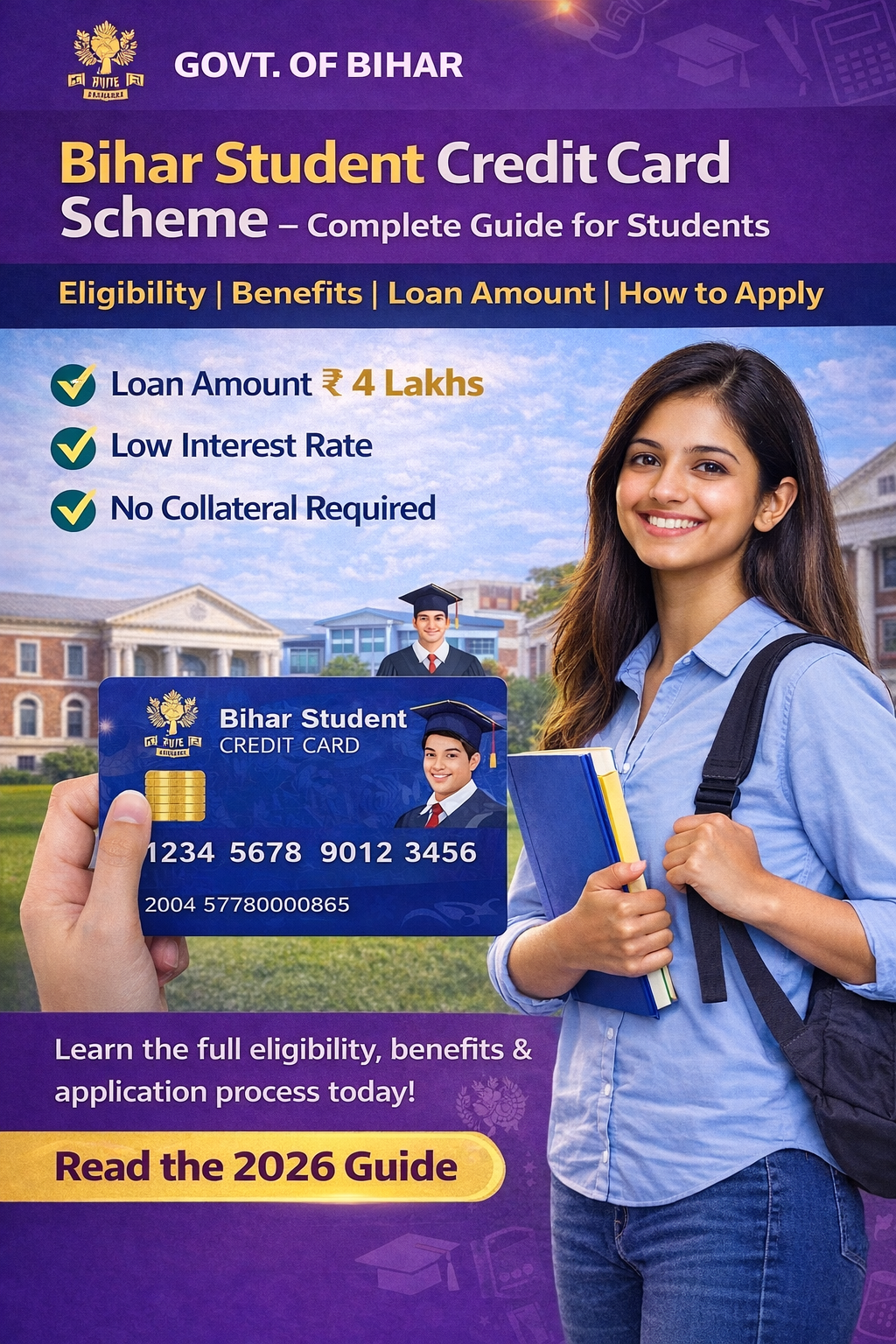
Bihar Student Credit Card Scheme – Eligibility, Benefits, Loan Amount & How to Apply

Bihar Student Credit Card Scheme – Complete Guide for Students

Education is the foundation of a successful career, but financial constraints often prevent students from pursuing higher studies. To solve this challenge, the Bihar Student Credit Card Scheme (BSCC) was introduced by the Government of Bihar to provide financial assistance to eligible students for higher education.

This scheme enables students to access affordable education loans with minimal barriers, ensuring that deserving candidates can continue their academic journey without stress.

What is the Bihar Student Credit Card Scheme?

The Bihar Student Credit Card Scheme is a government-backed financial assistance program designed to help students pursue higher education by providing loans at low interest rates. The scheme is part of the state’s initiative to improve educational accessibility and employment opportunities.

Under this scheme, students can obtain funding for various professional and academic courses within India.

Key Benefits of Bihar Student Credit Card

✅ Loan Amount up to ₹4 Lakhs
Students can receive financial support covering tuition fees, books, laptops, and other academic expenses.

✅ Low Interest Rates
The scheme offers student-friendly interest rates compared to traditional education loans.

✅ No Collateral Required
Students are not required to provide property or assets as security.

✅ Flexible Repayment Options
Repayment begins after completion of the course, reducing immediate financial pressure.

✅ Supports Career-Oriented Courses
Applicable for a wide range of degree, diploma, technical, and professional programs.

Who is Eligible for Bihar Student Credit Card?

Students typically qualify if they meet the following conditions:

✔ Permanent resident of Bihar
✔ Completed Class 12 (or equivalent)
✔ Enrolled in a recognised higher education course
✔ Age criteria as per government norms

Eligibility rules may vary based on updated government guidelines.

Courses Covered Under the Scheme

The scheme generally supports:

  • Graduation Programs (BA, BCom, BSc, etc.)
  • Professional Courses (B.Ed, Engineering, Management, etc.)
  • Technical & Skill-Based Courses
  • Diploma & Vocational Programs

How to Apply for Bihar Student Credit Card

The application process is designed to be straightforward:

  1. Register on the official portal M N S S B Y
  2. Fill in academic & personal details
  3. Upload required documents
  4. Verification & approval process
  5. Loan sanction

Students are advised to ensure accuracy while submitting documents to avoid delays.

Why This Scheme is Important for Bihar Students ?

Many talented students discontinue education due to financial limitations. The Bihar Student Credit Card Scheme removes this obstacle by providing structured financial support, empowering students to focus on studies and career growth.

This initiative has significantly improved higher education participation across Bihar.

Final Words

If you are planning to pursue higher education but worried about expenses, the Bihar Student Credit Card Scheme can be a valuable opportunity. Understanding eligibility and the application process is crucial for successful approval.

Posted on Leave a comment

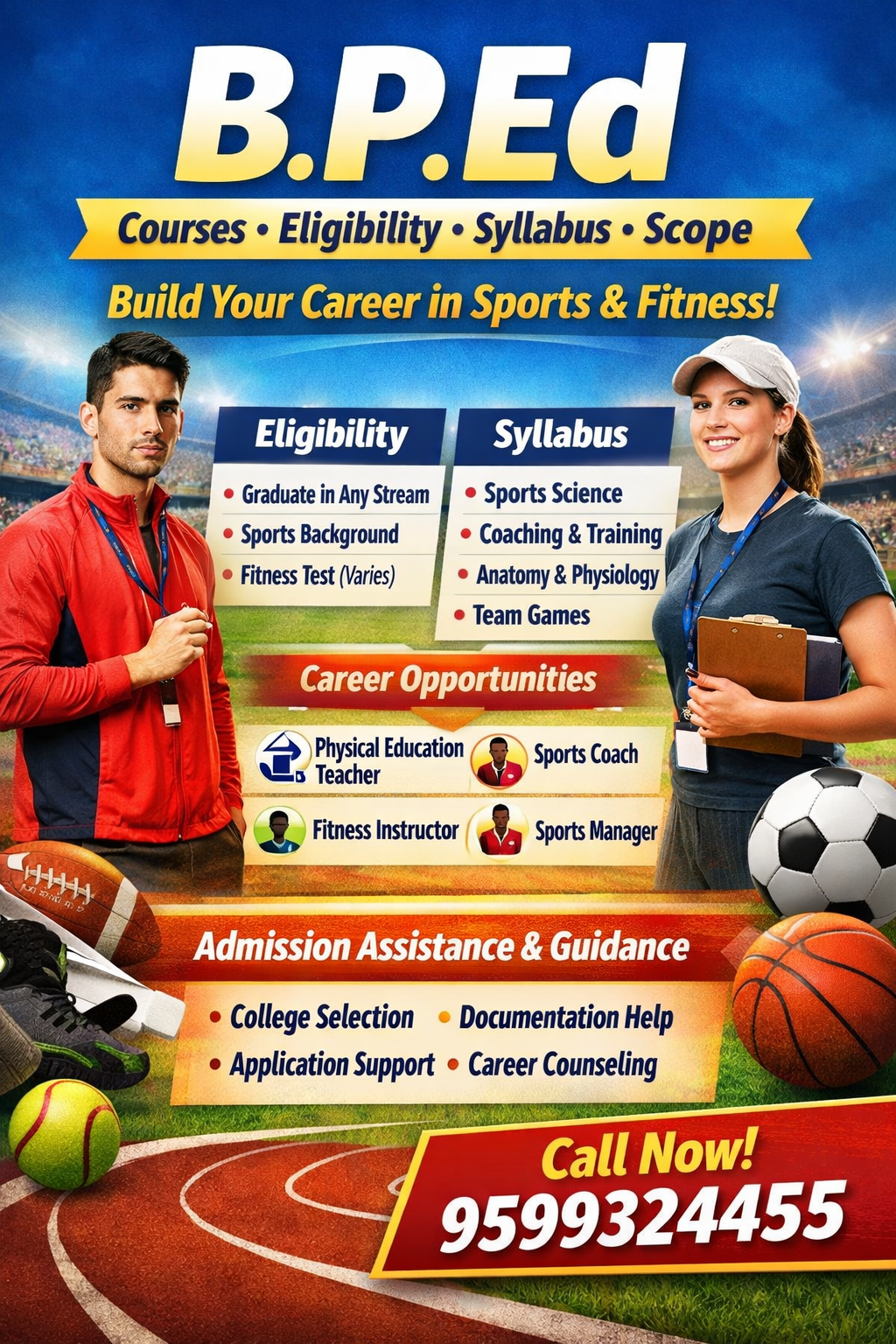
B.P.Ed – Course Details, Eligibility, Syllabus, Career Scope & Admission Support

If you are passionate about sports, fitness, physical training, and teaching, the Bachelor of Physical Education (B.P.Ed) is one of the best career-oriented degrees you can choose. With the growing focus on health, athletics, and physical well-being in schools and institutions, qualified physical education professionals are increasingly in demand.

This guide covers everything you need to know about the B.P.Ed program.

📘 What is B.P.Ed?

B.P.Ed (Bachelor of Physical Education) is a professional undergraduate degree designed for students who want to build careers in:

✅ Physical Education Teaching
✅ Sports Coaching & Training
✅ Fitness & Wellness Industry
✅ Sports Management & Academics

The course blends theoretical knowledge + practical training, making it highly skill-based and career-focused.

✅ Eligibility Criteria for B.P.Ed

Eligibility requirements may vary by institution, but generally include:

✔ Graduation in any stream from a recognized university
✔ Interest or background in sports / physical activities
✔ Some universities may require physical fitness tests
✔ Minimum qualifying marks as per university norms

Certain colleges may also consider candidates with strong sports achievements.

📚 B.P.Ed Syllabus Overview

The B.P.Ed curriculum is designed to develop both scientific understanding and practical expertise in physical education.

Common subjects include:

🧠 Theoretical Subjects

  • Foundations of Physical Education
  • Sports Psychology
  • Sports Sociology
  • Anatomy & Physiology
  • Health Education
  • Kinesiology & Biomechanics
  • Sports Management

🏃 Practical Components

  • Track & Field Events
  • Team Sports (Football, Basketball, Volleyball, etc.)
  • Yoga & Wellness Practices
  • Officiating & Coaching Methods
  • Fitness Training Techniques

The program emphasizes hands-on skill development, leadership, and training methodologies.

🚀 Career Scope After B.P.Ed

Graduates of B.P.Ed have diverse career opportunities across sectors.

🎯 Popular Career Options

✅ Physical Education Teacher (Schools / Colleges)
✅ Sports Coach / Trainer
✅ Gym / Fitness Instructor
✅ Sports Academy Trainer
✅ Yoga Instructor
✅ Sports Event Manager
✅ Personal Trainer / Wellness Expert

With experience, professionals can move into sports administration, academics, or pursue M.P.Ed for advanced roles.

🌟 Why Choose B.P.Ed?

✔ Growing Demand for Fitness & Sports Professionals
✔ Opportunity to Work in Education & Sports Fields
✔ Active & Dynamic Career Path
✔ High Satisfaction for Sports Enthusiasts
✔ Expanding Government & Private Sector Roles

As awareness of health and physical activity rises, career stability continues to improve.

⚡ Admission Support & Guidance

Many students struggle with admission procedures, eligibility confusion, documentation, and selecting the right pathway. Proper guidance can simplify the entire process.

Admission assistance typically helps with:

✔ Eligibility Verification
✔ Documentation Support
✔ College / University Selection
✔ Application & Enrollment Guidance
✔ Student Counseling

📞 Get Expert Admission Assistance

If you are planning to pursue B.P.Ed and need complete support:

Call / WhatsApp: +91 – 9599329455

Start your journey toward a professional sports & physical education career today. 🏆

Posted on Leave a comment

FMGE: Complete Knowledge Everything You Need to Know

If you are an Indian student who has completed an MBBS degree abroad, passing the Foreign Medical Graduate Examination (FMGE) is mandatory to practice medicine in India. The FMGE is conducted by the National Board of Examinations (NBE) twice a year to ensure that foreign medical graduates meet the required standards to work as doctors in India.

In this blog, we will cover everything about FMGE, including eligibility, syllabus, preparation tips, and how RKIMT can guide you through the process.

What is FMGE?

The Foreign Medical Graduate Examination (FMGE) is a licensing exam for Indian and Overseas Citizens of India (OCI) who have obtained a medical degree from a foreign university.

  • Conducted by: National Board of Examinations (NBE)
  • Frequency: Twice a year – June and December
  • Mode: Computer-based
  • Passing Criteria: A minimum of 50% marks (150 out of 300)

Once you pass FMGE, you can register with the Medical Council of India (MCI) or the State Medical Council to start your medical practice.

FMGE Eligibility Criteria

Before applying for FMGE, ensure you meet the following conditions:

1. Nationality – You must be an Indian citizen or an Overseas Citizen of India (OCI).

2. Qualification – A primary medical degree (MBBS equivalent) from a recognized foreign university.

3. Documentation

  • Valid passport and visa
  • Degree completion certificate
  • Internship completion certificate (if applicable)
  • Eligibility certificate issued by the National Medical Commission (NMC) before admission abroad (if required).

Note: If your foreign degree is not recognized by the NMC, you cannot appear for FMGE.

FMGE Exam Pattern:

Particulars                                                           Details
Mode of Exam                                               Online (Computer-based)
Total Questions                                                       300
Type of Questions                                        Multiple Choice Questions (MCQs)
Marks per Question                                                  1
Negative Marking                                         No negative marking
Passing Marks                                                     150/300
Duration                                                         Two sessions of 2 hours 30 minutes each

The exam consists of two parts, each with 150 questions, and you must pass the combined total to qualify.

FMGE Syllabus

The FMGE syllabus is based on the MBBS curriculum prescribed by the NMC. It includes pre-clinical, para-clinical, and clinical subjects.

1. Pre-Clinical Subjects

  • Anatomy
  • Physiology
  • Biochemistry

2. Para-Clinical Subjects

  • Pathology
  • Microbiology
  • Pharmacology
  • Forensic Medicine

3. Clinical Subjects

  • General Medicine
  • Pediatrics
  • Psychiatry
  • General Surgery
  • Orthopedics
  • ENT (Ear, Nose, Throat)
  • Ophthalmology
  • Obstetrics & Gynecology
  • Anesthesiology
  • Dermatology

Steps to Apply for FMGE

  • Visit the NBE Official Website www.natboard.edu.in
  • Register Online – Create a profile and fill out the application form.
  • Upload Documents – Degree certificate, passport, eligibility certificate, etc.
  • Pay Application Fee – Online payment through net banking/UPI.
  • Download Admit Card – Available a few days before the exam.
  • Appear for Exam – Attempt both sessions carefully.
  • Check Results – Results are published on the NBE portal.

Preparation Tips for FMGE

Passing FMGE is challenging, but with the right approach, you can achieve success:

1. Know the Syllabus Thoroughly

Focus on high-weightage subjects like Medicine, Surgery, and Pediatrics.

2. Practice Mock Tests

Take online mock exams to improve speed and accuracy.

3. Time Management

Allocate study hours wisely, giving extra time to weaker subjects.

4. Revise Regularly

Revision is key to retaining important concepts.

5. Seek Expert Guidance

Enroll in coaching or mentoring programs for structured preparation.

Documents Required for FMGE Application

Here is the checklist of documents you will need:

  • Passport (with visa stamp)
  • 10th and 12th marksheets
  • MBBS degree from a foreign university
  • Internship completion certificate (if applicable)
  • Eligibility certificate from NMC
  • Identity proof (Aadhar card, PAN card, etc.)
  • Scanned photograph and signature

Why Choose RKIMT for FMGE Guidance?

Preparing for FMGE while handling documentation and registration can be overwhelming. RKIMT provides complete support for medical graduates, including:

  • Assistance with eligibility verification and NMC documentation
  • Guidance on FMGE preparation strategies
  • Admission support for students planning MBBS abroad
  • Post-FMGE counseling for career growth

With RKIMT’s expertise, you can focus entirely on clearing the exam, while they handle the procedural steps smoothly.

📞 Contact RKIMT Now for FMGE assistance and MBBS admission guidance.

Frequently Asked Questions (FAQs)
Q1. What is the pass percentage for FMGE?

The pass percentage is 50%, meaning you need 150 marks out of 300.

Q2. Can I appear for FMGE multiple times?

Yes, there is no limit on the number of attempts for FMGE.

Q3. Is FMGE mandatory for MBBS graduates from all countries?

Yes, except for students who completed MBBS from UK, USA, Canada, Australia, or New Zealand, where direct registration may be allowed under certain rules.

Q4. How many times is FMGE conducted in a year?

It is conducted twice every year – June and December.

Q5. Does RKIMT help with FMGE preparation?

Yes, RKIMT provides complete guidance, including preparation tips, documentation support, and counseling.

Conclusion

The FMGE is a crucial step for foreign medical graduates to practice in India. With proper preparation, understanding of the exam pattern, and expert guidance from RKIMT, you can clear the exam and start your medical career confidently.

📞 Contact RKIMT today to get expert FMGE and MBBS admission support.

Posted on Leave a comment

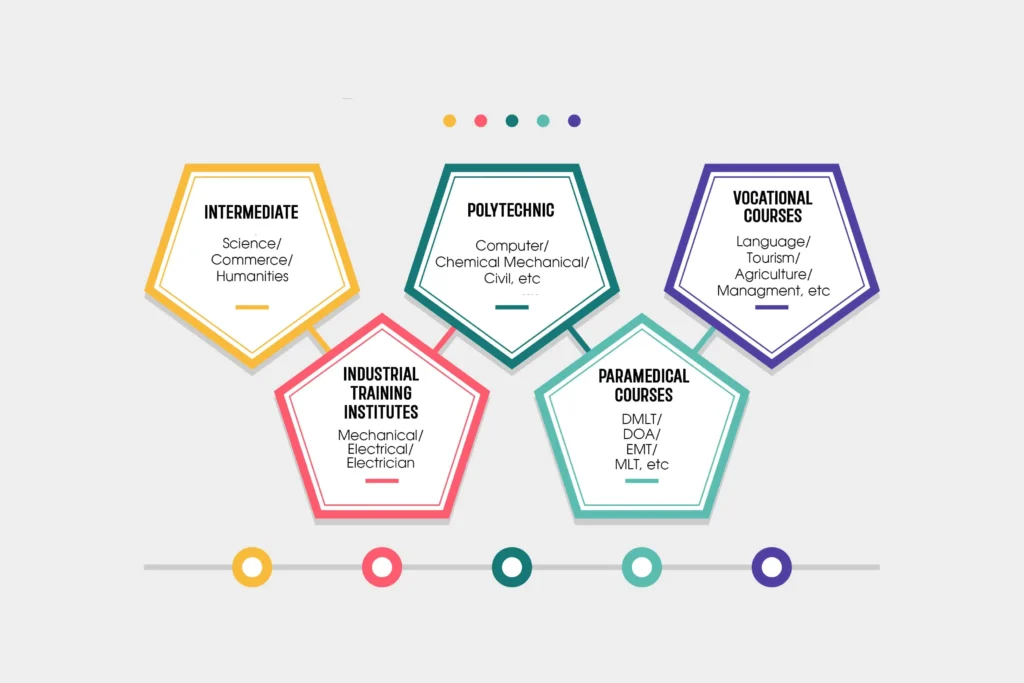
Career Oriented Courses After 10th – Build Your Future with the Right Choice

Choosing the right career path after 10th grade is a crucial decision that shapes your future. Many students and parents believe that the only option is to continue with 11th and 12th (Science, Commerce, or Arts), but that’s not true. There are several Career Oriented Courses after 10th that can help you gain skills, earn a professional qualification, and start earning at an early stage.

If you are someone who is looking for job-oriented courses after 10th, this guide will help you explore the best options.

Why Choose Career-Oriented Courses After 10th?

Here are some reasons why students choose skill development courses instead of traditional schooling:

  • 🚀 Early Career Start – Start working at a young age with practical skills.
  • 💰 Financial Independence – Earn while you study further.
  • 🎯 Specialized Knowledge – Gain expertise in a particular field.
  • 🌍 Global Opportunities – Some courses are internationally recognized.
  • 📚 Alternative to 12th – Perfect for students who don’t want to continue with regular school education.

Top Career-Oriented Courses After 10th

Here’s a list of some highly demanding courses you can pursue after class 10:

1. Diploma in Engineering (Polytechnic)

Duration: 3 Years

Eligibility: 10th Pass with at least 35-40% marks

Career Options: Junior Engineer, Technician, Supervisor in Government and Private sectors

Specializations:

  • Civil Engineering
  • Mechanical Engineering
  • Electrical Engineering
  • Computer Science
  • Automobile Engineering

Why Choose It?
Polytechnic courses are perfect for students who want to build a career in technical fields without going through traditional 11th-12th.

2. ITI (Industrial Training Institute) Courses

Duration: 6 months – 2 years (depending on trade)

Eligibility: 10th pass students

Popular Trades:

  • Electrician
  • Fitter
  • Welder
  • Computer Operator & Programming Assistant (COPA)
  • Plumber
  • Refrigeration & AC Mechanic

Career Opportunities:
Government jobs, private industries, self-employment opportunities.

3. Diploma in Hotel Management

Duration: 1 – 3 Years

Career Opportunities: Chef, Front Office Executive, Hotel Manager, Event Planner, Cruise Line Jobs.

The hospitality industry is growing rapidly, and a diploma in hotel management can help you secure high-paying jobs both in India and abroad.

4. Diploma in Computer Applications (DCA)

Duration: 6 months – 1 year

Key Topics:

  • MS Office
  • Tally
  • Basic Programming
  • Computer Networking

Career Scope: Data Entry Operator, Computer Operator, Back Office Executive.

5. Diploma in Fashion Designing

Duration: 1 – 2 years

Career Opportunities: Fashion Designer, Stylist, Textile Designer, Boutique Owner.

If you have a creative mindset and interest in the fashion industry, this course is a perfect choice.

6. Nursing & Paramedical Courses

Duration: 1 – 3 years

Popular Courses:

  • Diploma in Nursing
  • Diploma in Medical Lab Technology (DMLT)
  • Diploma in Radiology
  • Emergency Medical Technician (EMT)

Career Opportunities: Hospitals, clinics, diagnostic centers, government healthcare jobs.

7. Graphic Designing & Animation Courses

Duration: 6 months – 2 years

Topics Covered:

  • Photoshop
  • Illustrator
  • 2D & 3D Animation
  • Video Editing

Career Scope: Graphic Designer, Animator, Video Editor, Digital Artist.

8. Vocational Courses Under NSDC

The National Skill Development Corporation (NSDC) offers short-term vocational courses that help students get industry-relevant training.

  • Examples: Digital Marketing, Retail Management, Beauty & Wellness, Logistics, etc.
  • Duration: 3 – 12 months

Tips for Choosing the Right Course

  • ✅ Identify your interests and strengths.
  • ✅ Check job prospects of the course.
  • ✅ Prefer institutes with government recognition.
  • ✅ Ensure there is scope for further education.
  • ✅ Consider budget and location of the institute.

Career Support with RKIMT

At RKIMT, we provide admission support for various career Oriented Courses after 10th. Whether you are interested in technical diplomas, healthcare, hospitality, or IT courses, our expert team will guide you at every step.

📞 Contact RKIMT today to choose the best course for your future.

Conclusion

After 10th, you don’t have to limit yourself to just traditional schooling. There are numerous Career Oriented Courses that can help you gain practical skills, start earning early, and build a strong foundation for your future. Choose wisely, and take the first step toward a successful career.

Posted on Leave a comment

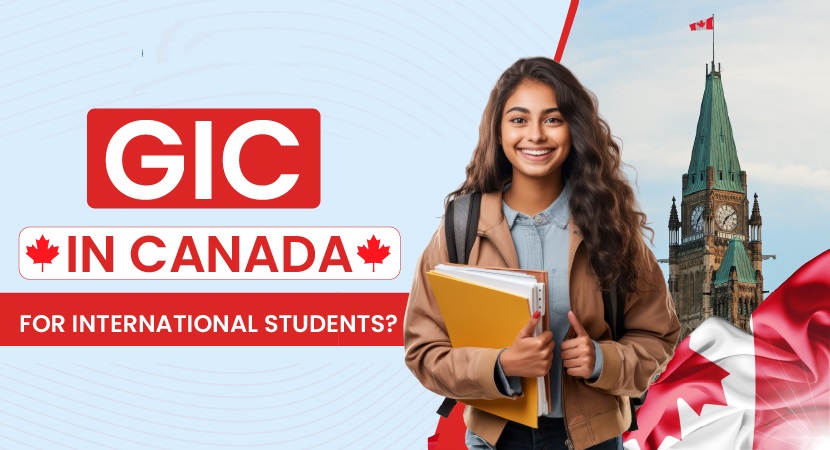
GIC Canada –Complete Guide for International Students (2025)

Are you planning to study in Canada and apply through the Student Direct Stream (SDS)? One of the most important requirements you need to fulfill is a GIC – Guaranteed Investment Certificate.

A GIC acts as proof of funds for your visa application and ensures you can manage your living expenses in Canada during your first year. In this blog post, we will cover everything you need to know about GIC Canada, including what it is, why it’s important, how to open it, top banks, and refund policies.

What is GIC in Canada?

GIC (Guaranteed Investment Certificate) is a secure investment product offered by Canadian banks to international students.

  • It is mandatory for students applying through SDS (Student Direct Stream).
  • As per current rules, CAD 20,635 must be deposited into a Canadian bank GIC account (updated as of 2024).
  • This amount covers your living expenses for the first year while you focus on your studies.

Essentially, a GIC shows the Canadian government that you are financially prepared to study and live in Canada.

Why GIC is Important for Canada Student Visa?

When you apply for a Canadian study permit, Immigration, Refugees and Citizenship Canada (IRCC) wants to ensure you can support yourself financially.
Here’s why a GIC is required:

  • 💰 Proof of Funds – Shows you can afford accommodation, food, transportation, etc.
  • Faster Visa Processing – Required for SDS applications for quicker approval.
  • 🔒 Safe Investment – Your money is protected by Canadian banks.
  • 🛡 Structured Release of Funds – Helps students budget their monthly expenses.

Latest GIC Requirement for SDS (2025)

Requirement Details                                       (2025)
Minimum GIC Amount                                    CAD 20,635
Type of Account                                     GIC (Guaranteed Investment Certificate)
Visa Category                                           SDS (Student Direct Stream)
Release of Funds                                    Monthly / Quarterly basis after arrival

Note:
The amount is separate from tuition fees, which must also be paid to your college/university before applying for the visa.

Top Banks for GIC in Canada

Here are some trusted Canadian banks where you can open a GIC account:

Bank Name            Processing Time            Special Features
Scotiabank                 10 – 15 days                 One of the most popular choices for Indian students
ICICI Bank Canada  7 – 12 days                    Simple online application
SBI Canada Bank    10 – 14 days                   Affordable fees
CIBC (Canadian Imperial Bank of Commerce) 8 – 12 days Fast digital process
HSBC Canada            10 – 15 days                  Global presence

Step-by-Step Process to Open a GIC Account

Follow these steps to open a GIC account smoothly:

Step 1: Choose a Bank

Select a Designated Canadian Bank such as Scotiabank, ICICI Bank Canada, or CIBC.

Step 2: Apply Online

Fill out the GIC application form on the bank’s website and upload the required documents:

  • Passport copy
  • Admission letter from Canadian institution
  • Email ID and contact number

Step 3: Transfer Funds

Transfer CAD 20,635 (or the current required amount) from your bank in India to the Canadian GIC account.

💡 Remember to include wire transfer fees.

Step 4: Receive Confirmation

The bank will send you a GIC certificate or confirmation letter, which is required for your SDS visa application.

Step 5: Access Your Funds in Canada

  • Upon arriving in Canada, visit the bank branch to verify your identity and activate the account.
  • A portion of the GIC (around CAD 2,000) will be released immediately.
  • The rest will be given in monthly or quarterly installments.

GIC Refund Process (If Visa is Refused)

If your visa is refused, you can get a full refund of your GIC amount by following these steps:

  • Submit the visa refusal letter from IRCC to the bank.
  • Fill out the refund request form online.
  • The bank will process your refund in 4 – 8 weeks.

GIC Fees and Charges
Bank                                                                GIC Processing Fee
Scotiabank                                                   CAD 200
ICICI Bank Canada                                    CAD 150
CIBC                                                              CAD 150
SBI Canada Bank                                       CAD 150

💡 These fees are non-refundable.

Documents Required for GIC Canada

Here’s the checklist of documents you need:

  • Valid Passport (first and last page scanned copy)
  • Letter of Admission from a Canadian institution
  • Bank statement for fund transfer
  • Visa refusal letter (if applying for refund)
  • Email ID and active phone number

Tips for a Smooth GIC Process

  • ✅ Start the GIC process at least 2-3 months before your visa application.
  • ✅ Double-check the bank details before transferring funds.
  • ✅ Always keep a soft copy of your GIC certificate for visa filing.
  • ✅ Use a trusted bank to avoid delays or rejection.
  • ✅ Stay updated with the latest IRCC rules.

How RKIMT Can Help You

At RKIMT, we provide complete guidance for students applying to Canada:

  • Assistance with GIC account opening
  • College/University admission support
  • SDS visa filing guidance
  • WES / IQAS verification support

📞 Contact RKIMT today to make your Canadian study journey stress-free!

Conclusion

A GIC Canada account is a mandatory requirement for students applying through SDS. It acts as proof of funds, ensures you have a secure financial start, and helps you manage your expenses while studying in Canada.

By following the correct process and choosing the right bank, you can complete your GIC process smoothly and quickly, increasing your chances of visa approval.

Posted on Leave a comment

D.Pharma (Diploma in Pharmacy) – Courses, Eligibility, Syllabus, Scope & Admission Support

Are you planning to build a career in the pharmaceutical and healthcare industry? A Diploma in Pharmacy (D.Pharm) is the perfect starting point for students who want to become a licensed pharmacist, work in drug manufacturing companies, or pursue higher studies like B.Pharm.

This blog covers everything you need to know about D.Pharm – from eligibility and syllabus to future career scope, and how RKIMT can help you with hassle-free admission and PCI registration guidance.

💊 What is D.Pharm?

D.Pharm (Diploma in Pharmacy) is a two-year diploma program that focuses on the fundamentals of pharmacy, medicine preparation, dispensing, and healthcare practices.
It is approved by the Pharmacy Council of India (PCI), making graduates eligible for State Pharmacy Council registration to work as registered pharmacists.

This course is ideal for:

  • 12th science pass students
  • Working professionals in medical stores or hospitals
  • Students who discontinued studies but wish to complete their diploma
  • Individuals who want to open their own pharmacy business

🎓 Eligibility Criteria for D.Pharma

To take admission in a D.Pharm course, a student must fulfill the following criteria:

1. Educational Qualification:

  • 10+2 (Science stream) with Physics, Chemistry, and Biology/Mathematics.

2. Minimum Marks Required:

  • At least 45%-50% aggregate marks (varies by college or state regulations).

Age Limit:

  • Minimum 17 years of age.
  • No upper age limit – ideal for working professionals and those restarting education.

📚 D.Pharm Syllabus – Year-Wise Subjects

The D.Pharm syllabus is designed to give theoretical knowledge along with practical training in pharmaceutical sciences.

First Year Subjects

  • Pharmaceutics – I
  • Pharmaceutical Chemistry – I
  • Pharmacognosy
  • Human Anatomy & Physiology
  • Health Education & Community Pharmacy
  • Biochemistry & Clinical Pathology

Second Year Subjects

  • Pharmaceutics – II
  • Pharmaceutical Chemistry – II
  • Pharmacology & Toxicology
  • Pharmaceutical Jurisprudence (Drug Laws)
  • Hospital & Clinical Pharmacy
  • Drug Store and Business Management

💡 Tip: Students must also undergo practical training in hospitals or retail pharmacies as part of their curriculum.

⚡ Non-Attending & Distance Learning Options

Many students and professionals cannot attend regular classes due to work or personal commitments.
RKIMT offers non-attending D.Pharm programs with:

  • Flexible learning schedule
  • No compulsory daily attendance
  • Exam and PCI registration guidance
  • Fast-track options for discontinued or dropout students
  • Personalized counseling and document support

This makes it ideal for working professionals and those looking for career advancement.

💼 Career Scope After D.Pharma

Completing a D.Pharm opens up multiple career opportunities in the pharmaceutical and healthcare sectors.

Career Options:

  • Registered Pharmacist in hospitals, retail stores, or clinics
  • Pharmaceutical Manufacturing Jobs
  • Medical Representative or Sales Executive
  • Drug Regulatory Affairs and Quality Control
  • Clinical Research Associate
  • Pursue B.Pharm through lateral entry (direct 2nd-year admission)
  • Start your own pharmacy business

With the growing demand for healthcare services, D.Pharm graduates enjoy stable career prospects and growth opportunities.

💰 Average Salary After D.Pharm
Role                                                                                                      Average Salary (Per Year)
Hospital Pharmacist                                                                             ₹2.5 – 4.5 LPA
Medical Representative                                                                       ₹3 – 5 LPA
Quality Control Officer                                                                         ₹3 – 6 LPA
Retail Pharmacy Owner                                                                      ₹4 – 10 LPA+

📜 Documents Required for D.Pharm Admission

  • 10th & 12th Marksheet and Certificate
  • Transfer Certificate / Migration Certificate
  • Aadhaar Card or Valid Government ID
  • Passport size photographs
  • Gap Certificate (if applicable)
  • Medical fitness certificate (some states may require this)

📞 Contact RKIMT for Admission Support

RKIMT provides end-to-end assistance for students looking to complete D.Pharm, including:

  • PCI-approved college admissions
  • Non-attending and fast-track programs
  • Exam preparation & PCI registration guidance
  • Personal counseling and document support

Call/WhatsApp RKIMT: 📱 +91- 9599329455

Email: info@rkimt.com

Website: www.rkimt.com

❓ D.Pharm (Diploma in Pharmacy)  FAQs

Q1. Can I do D.Pharm without attending regular classes?

A: Yes, through non-attending D.Pharm programs, you can complete your studies without daily attendance and directly appear for exams.

Q2. Is a PCI license mandatory after D.Pharm?

A: Yes, PCI registration is required to legally work as a pharmacist or open a pharmacy.

Q3. Can I get lateral entry into B.Pharm after D.Pharm?

A: Yes, after completing D.Pharm, you can join B.Pharm directly in the 2nd year.

Q4. What if I discontinued my Diploma in Pharmacy earlier?

A: You can rejoin through RKIMT’s fast-track options and complete your diploma without losing your previous academic credits.

Q5. Is D.Pharm valid abroad?

A: Yes, but you may need to clear additional licensing exams in countries like the USA, Canada, or Gulf nations.

Conclusion

Diploma in Pharmacy is a valuable career-building diploma for those passionate about healthcare and pharmacy. With PCI-approved programs, non-attending learning modes, and guidance from RKIMT, students and professionals can complete their diploma smoothly and step into a rewarding career in pharmacy.

Whether you want to work as a licensed pharmacist, start your own medical store, or pursue higher education, D.Pharm is your first step towards success.

Take the first step today – Contact RKIMT and secure your admission now!

Posted on Leave a comment

Top Law Colleges in Telangana: Course, Entrance Exam

Telangana has become a hub for legal education in India, offering opportunities for students to pursue LLB, BALLB, LLM, and PhD in reputed institutions. With the presence of NALSAR (a premier National Law University) and historic institutions like Osmania University, Telangana is among the top choices for law aspirants. Here is the list of the Top Law Colleges in Telangana with complete details.

1. NALSAR University of Law, Hyderabad

  • Established: 1998
  • Courses: BALLB (Hons), LLM, MBA in Law, PhD
  • Entrance Exam: CLAT (Common Law Admission Test)
  • Highlights: One of India’s top-ranked National Law Universities.
  • Contact: www.nalsar.ac.in

2. University College of Law, Osmania University, Hyderabad

  • Established: 1923
  • Courses: 3-year LLB, 5-year BALLB, LLM, PhD
  • Entrance Exam: TS LAWCET / PGLCET
  • Highlights: One of the oldest and most prestigious law schools in South India.
  • Contact: www.osmania.ac.in

3. Kakatiya University, Warangal – Faculty of Law

  • Established: 1980
  • Courses: 3-year LLB, 5-year BALLB, LLM
  • Entrance Exam: TS LAWCET / PGLCET
  • Highlights: Strong focus on regional legal studies & affordable fees.
  • Contact: www.kakatiya.ac.in

4. Mahatma Gandhi Law College, Hyderabad

  • Established: 1991
  • Courses: 3-year LLB, 5-year BALLB, LLM
  • Entrance Exam: TS LAWCET
  • Highlights: Known for moot court activities and private law education.
  • Contact: www.mglawcollege.com

5. Aurora’s Legal Sciences Academy, Hyderabad

  • Established: 2010
  • Courses: BALLB, LLB, LLM
  • Entrance Exam: TS LAWCET
  • Highlights: Modern campus, focus on practical training.
  • Contact: www.aurora.edu.in

6. Pendekanti Law College, Hyderabad

  • Established: 1991
  • Courses: BALLB, LLB, LLM
  • Entrance Exam: TS LAWCET
  • Highlights: Strong academic reputation, well-known in Hyderabad.
  • Contact: www.pendekantilawcollege.edu.in

7. Post Graduate College of Law, Basheerbagh (OU Campus)

  • Established: 1923
  • Courses: LLM, PhD
  • Entrance Exam: TS PGLCET
  • Highlights: Exclusively for postgraduate & research law education.
  • Contact: www.osmania.ac.in

8. Padala Rama Reddi Law College, Hyderabad

  • Established: 1988
  • Courses: 3-year LLB, 5-year BALLB
  • Entrance Exam: TS LAWCET
  • Highlights: Renowned for discipline and experienced faculty.
  • Contact: Padala Rama Reddi College

9. Justice Kumarayya College of Law, Karimnagar

  • Established: 1991
  • Courses: LLB, BALLB, LLM
  • Entrance Exam: TS LAWCET
  • Highlights: Affordable education, good regional reputation.
  • Contact: Justice Kumarayya College

10. Adarsha Law College, Warangal

  • Established: 1994
  • Courses: 3-year LLB, 5-year BALLB
  • Entrance Exam: TS LAWCET
  • Highlights: One of the oldest private law colleges in Warangal.
  • Contact: Adarsha Law College

11. Sultan-Ul-Uloom College of Law, Hyderabad

  • Established: 1989
  • Courses: LLB, BALLB, LLM
  • Entrance Exam: TS LAWCET
  • Highlights: Part of the famous SUES group with modern facilities.
  • Contact: www.sultanululoom.ac.in

12. Manair College of Law, Khammam

  • Established: 1991
  • Courses: LLB, BALLB
  • Entrance Exam: TS LAWCET
  • Highlights: Popular in Khammam region for quality law education.
  • Contact: Manair Law College

13. Ananntha Law College, Hyderabad

  • Established: 2010
  • Courses: BALLB, LLB
  • Entrance Exam: TS LAWCET
  • Highlights: Emerging private law college with modern teaching methods.
  • Contact: Ananntha College

14. Dr. Ambedkar Law College, Hyderabad

  • Established: 2004
  • Courses: 3-year LLB, 5-year BALLB
  • Entrance Exam: TS LAWCET
  • Highlights: Focus on legal aid and social justice education.
  • Contact: Ambedkar Law College

15. Vivekananda Law College, Karimnagar

  • Established: 2000
  • Courses: BALLB, LLB
  • Entrance Exam: TS LAWCET
  • Highlights: Popular in North Telangana for affordable law courses.
  • Contact: Vivekananda Law College

Admission Process for Law Colleges in Telangana

  • 5-year BALLB & 3-year LLB: Admission through TS LAWCET.
  • LLM: Admission through TS PGLCET.
  • NALSAR: Admission via CLAT (National-level exam).

Why Choose Telangana for Legal Studies?

✔ NALSAR – Top ranked NLU in India
✔ Historic Osmania University Law College (since 1923)
✔ Affordable fees in government colleges
✔ Wide network of private law colleges across Hyderabad, Warangal, Karimnagar
✔ Excellent moot court, internships & placement opportunities

Contact for Admission Guidance

Looking for LLB, BALLB, or LLM admission in Telangana?
We provide:
✅ Admission Support
✅ Entrance Exam Guidance (CLAT, LAWCET, PGLCET)
✅ Career Counseling

📞 Contact RKIMT – Your Trusted Legal Education Partner

Posted on Leave a comment

How to Register with the Bar Council of Delhi (BCD)

The Bar Council of Delhi (BCD) is the statutory body that registers advocates under the Advocates Act, 1961. Without this registration, you cannot practice law in Delhi courts or appear for the All India Bar Examination (AIBE). BCD is responsible for registering advocates, monitoring their professional conduct, and safeguarding the rights, privileges, and interests of lawyers practicing in Delhi. It also plays an active role in legal education, welfare schemes, and maintaining professional ethics among advocates.

✅ Eligibility

  • Must have completed LLB (3-year) or BA LLB (5-year course) from a recognized university/college approved by the Bar Council of India (BCI).
  • Must be an Indian citizen (Foreign nationals need special permission from BCI).
  • Must be at least 21 years old.

📋 Documents Required

  • Keep both originals and attested photocopies ready:
  • LLB Provisional / Degree Certificate (mandatory)
  • Mark sheets of all semesters/years of LLB
  • 10th & 12th certificates (proof of date of birth + qualification)
  • Graduation Degree & Mark sheets (for 3-year LLB students)
  • Passport-size photographs (usually 6 – white background)
  • Proof of residence (Aadhaar, Voter ID, Passport, Driving License)
  • ID proof (Aadhaar, PAN Card)
  • Stamp paper affidavit (format available from BCD office — declaring intent to practice law and no criminal record)
  • Certificate of enrollment in college/university (if required)
  • Internship/Training certificates (not always mandatory, but helpful)

💰 Fees

As of recent updates (subject to revision):

  • Enrollment Fee: ₹13,000 (for General category)
  • Enrollment Fee: ₹8,000 (for SC/ST candidates)
    (This includes fees for BCD, Bar Council of India, Identity Card, and Welfare Fund)

Fees must usually be paid via Demand Draft (DD) or online payment in favor of “Bar Council of Delhi” (confirm latest mode).

🛠 Step-by-Step Registration Process

1. Collect Application Form

  • Visit the Bar Council of Delhi office:
    👉 Address: Bar Council of Delhi, 2/6, Siri Fort Institutional Area, Khel Gaon Marg, New Delhi – 110049.
  • Get the Enrollment Form (sometimes available online on BCD website).

2. Fill the Form Carefully

  • Provide personal details, educational details, address, and declaration.
  • Affix passport-size photos where required.

3. Prepare Affidavit

  • Prepare the affidavit (format provided at BCD office or official website).
  • Get it attested by a Notary/Oath Commissioner.

4. Attach Documents

  • Self-attest copies of all educational certificates, ID, residence proof, etc.
  • Arrange them in the order mentioned in the checklist.

5. Pay Fees

  • Submit DD/Online Payment receipt along with the form.

6. Submit Application

  • Submit the completed file in person at the BCD office.
  • You will receive an acknowledgment receipt with your file number.

7. Verification

  • BCD will verify your documents and details.
  • They may call you if clarification is needed.

8. Enrollment Certificate

  • Once approved, you will be given an Enrollment Certificate with your Enrollment Number (D/xxxx/yyyy).
  • This certifies you as an Advocate under Bar Council of Delhi.

9. Apply for AIBE

  • After getting your enrollment number, you must register for the All India Bar Examination (AIBE).
  • Passing AIBE gives you a Certificate of Practice (COP), which allows you to practice law across India.

⏳ Time Taken

  • Usually 30–45 days from the date of submission, depending on verification speed.

📌 Additional Notes

  • You must renew your Certificate of Practice (COP) every 5 years as per BCI rules.
  • If you later shift your practice to another state, you can transfer your enrollment to another State Bar Council.
Posted on Leave a comment

BA LLB |Eligibility, Syllabus, Entrance Exams, Scope

The BA LLB (Bachelor of Arts + Bachelor of Laws) is a 5-year integrated program that combines humanities subjects with professional law education. Instead of completing a BA and then pursuing an LLB separately, BA LLB saves a year and offers a strong foundation in both arts and legal studies.

It is one of the most popular choices among students after 12th who aspire to become lawyers, judges, corporate legal advisors, or legal scholars.

✅ Eligibility

  • Qualification: 10+2 (Higher Secondary) from a recognized board
  • Minimum Marks: 45% for General / OBC, 40% for SC/ST (may vary by university)
  • Age Limit: As per the Bar Council of India (BCI), there is currently no upper age limit, though some institutes may have their own restrictions.

📖 BA LLB Syllabus

The BA LLB program is divided into 10 semesters over 5 years. It covers a mix of Arts and Law subjects:

Arts Subjects

  • Political Science
  • Sociology
  • Economics
  • History
  • English / Legal Language

Law Subjects

  • Constitutional Law
  • Family Law
  • Contract Law
  • Criminal Law (IPC, CrPC)
  • Civil Law (CPC, Evidence Act)
  • Environmental Law
  • Corporate Law
  • Intellectual Property Rights (IPR)
  • International Law
  • Human Rights Law
  • Legal Drafting, Moot Courts, Internship

This combination ensures that students develop a broad understanding of society along with specialized legal knowledge.

📝 Entrance Exams for BALLB

Admissions can be entrance-based or merit-based depending on the university. Major law entrance exams in India include:

  • CLAT (Common Law Admission Test) – for National Law Universities (NLUs)
  • AILET (All India Law Entrance Test) – for NLU Delhi
  • LSAT India
  • SLAT (Symbiosis Law Admission Test)
  • State-level law exams (MH CET Law, AP LAWCET, etc.)
  • Some private and state universities also offer direct admission based on 12th marks.

🌍 Career Scope After BA LLB

  • The BA LLB degree opens diverse career opportunities such as:
  • Litigation – Practice in courts as an advocate (after BCI registration)
  • Judiciary – Appear for judicial service exams to become a judge or magistrate
  • Corporate Law – Work as in-house counsel in MNCs, banks, and law firms
  • Law Firms & Legal Consultancy
  • Government Services & Civil Services (UPSC /State PSC)
  • NGOs & International Organizations (Human rights, environment, policy-making)
  • Academics & Research – Pursue LLM, PhD, and teaching career

🏛️ Admission Support with RKIMT

At RKIMT, we provide complete guidance and support for BA LLB aspirants:

  • Assistance with application & documentation
  • Guidance for regular, distance, and online law programs
  • Support for university selection (state/private recognized universities)
  • Re-admission & credit transfer help for discontinued students
  • Counseling for career scope in law & higher studies
  • Our mission is to make law education accessible, smooth, and student-friendly.

🔑 Conclusion

BA LLB is the perfect choice for students after 12th who want to build a career in law with a solid foundation in humanities. With wide career scope in litigation, judiciary, corporate sector, and academics, it continues to be one of the most sought-after law programs in India.

If you’re planning to pursue BA LLB or looking for admission/re-admission support, connect with RKIMT today and take the next step towards your legal career.

🎓 How Can Discontinued or Dropped Out Students Complete BA LLB?

Many students start their BA LLB (Bachelor of Arts + Bachelor of Laws) but due to personal, financial, or academic reasons, they drop out midway. Later, they want to continue and complete their law degree. Here’s how it can be done:

Options for Discontinued BA LLB Students

  • Credit Transfer System (Subject to University Policy)
  • If you already studied a few semesters, some universities allow you to transfer your credits to continue from where you left off.
  • Example: If you completed 2 years, you may get admission in 3rd year directly.
  • Lateral Entry / Re-Admission
  • Some universities provide re-admission for dropout students.
  • You can restart from the year you discontinued (2nd, 3rd, or 4th year).
  • Equivalent / Alternative Degree (Fast Track Mode)

🌍 How RKIMT Can Help?

  • Guidance on credit transfer & re-admission to continue BA LLB.
  • Help in selecting recognized universities for regular or distance law programs.
  • Alternative law-related degrees for students not interested in BCI practice.
  • Step-by-step documentation & admission support until completion.